
The Kaliganj Model: Making Birth and Death Registration Everyone’s Job
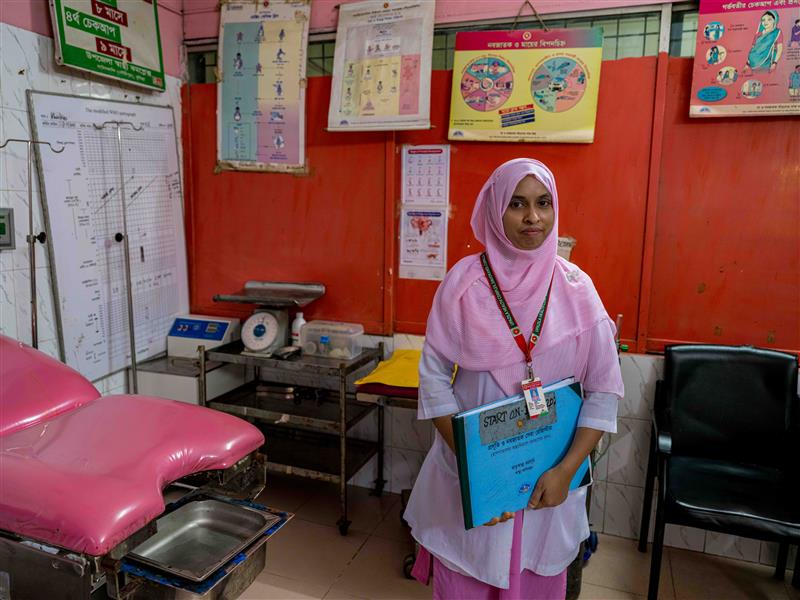
Bangladesh has long faced steep challenges in building a complete civil registration and vital statistics (CRVS) system. Out of roughly one million deaths per year, only about 20% occur in health facilities with medical certification. The remaining 80% happen in communities, where death registration rate is low and not medically certified.
To address this gap, the government conducts verbal autopsies in sample areas, where health workers interview family members about the circumstances of a death to help determine its likely cause. But because many community deaths are initially unreported, the civil registration system remains incomplete. As a result, the government lacks reliable vital statistics to monitor population health and guide interventions, constraining planning across health, education, and social protection. As Mohammad Khaled Hasan, Additional Secretary at the Cabinet Division, emphasized: “First and foremost, CRVS is important for ensuring the human rights of our people.”
In Kaliganj, a sub-district in central Bangladesh, the CRVS system was missing almost 80% of all deaths that happened each year, not because families didn’t care, but because the system made it difficult. The registration process was often complicated, time-consuming, and costly, especially for rural households. Many families lacked access to nearby registration centers, and few saw any immediate benefit unless paperwork was required for inheritance or legal matters. The result was a system that failed to capture the true scope of life and death in the community.
Rather than treating this as a paperwork issue, local officials asked a different question: what if birth and death registration became everyone’s job? Village police, health workers, and local administrators began working side by side. Health assistants notified registrars when a baby was born; village police reported deaths in their communities; administrators helped families understand why registration mattered and helped them with the process. The biggest shift came from making CRVS part of daily community life rather than an occasional bureaucratic task.
This approach, known as the Kaliganj model, proved transformative. Suddenly, more children were registered at birth, securing their rights to health care and education. Death registrations revealed patterns that had been invisible before. For the first time, officials could see that child drowning, often in shallow village ponds and even household buckets, was one of the leading causes of death. In workplaces, cause-of-death data highlighted frequent falls from height, guiding new safety standards. “With CRVS, the basic objective is prevention of preventable deaths,” Hasan emphasized.
These insights mattered because they saved lives. Once drowning emerged as a leading cause of death, parents and communities were mobilized around prevention. When workplace accidents were identified, labor authorities strengthened enforcement of safety harness requirements. Each registration provided foundational data to prevent further unnecessary deaths.
The Kaliganj model succeeded because it was locally rooted and the responsibility of birth and death registrations was shared across sectors. It did not depend on a single ministry or a one-off campaign. Instead, it created a web of accountability: health assistants, village police, and administrators each played their part, and families began to see the value of registering life events. The model also proved scalable, offering a template for all other districts across Bangladesh.
Today, Bangladesh is still working toward universal birth and death registration, but Kaliganj shows what is possible. It demonstrates that strengthening CRVS is not just about building databases, it’s about connecting systems to communities in ways that make sense for people’s lives. As Moyeen Uddin, a former senior government official, now working with the Data for Health Initiative, summarized: “With these last 10 years of birth and death registration improvements, I think achievement of around 50% registration completeness is notable and it’s a remarkable success.”